Decoding Commodity Pricing: A Practical Guide from the Field to Financial Markets
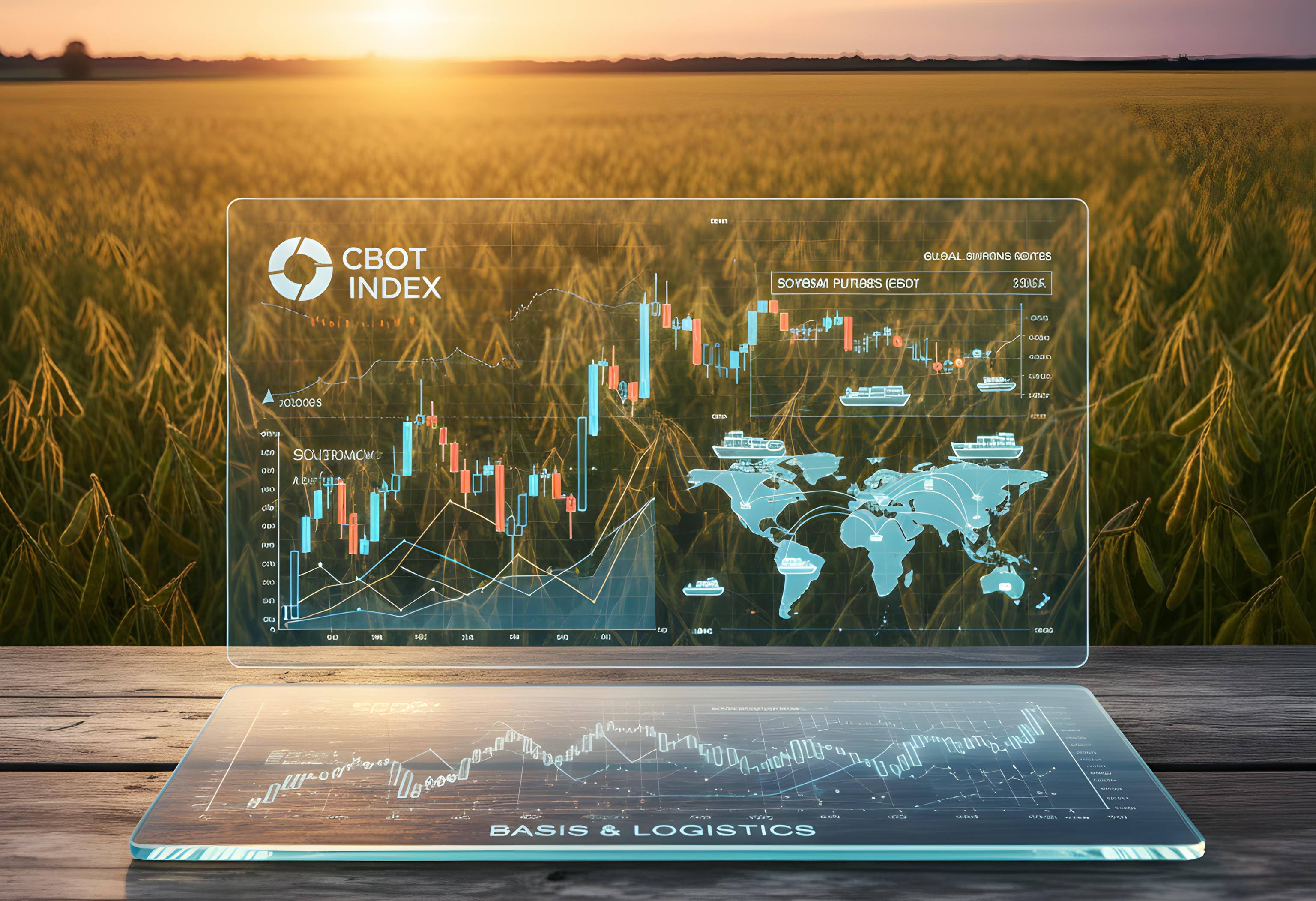
Decoding Commodity Pricing
A Practical Guide from the Field to Financial Markets
Introduction
In the world of commodities—whether it's soybeans, crude oil, or copper—the market sets the price. But the price you see on a glowing terminal in Chicago or London isn't necessarily the price the producer receives in their bank account. Understanding the "math" behind this journey is vital for both traders and those new to the industry.
1. The Foundation: Index-Based Pricing
The global reference point is usually an Exchange (Benchmark). For grains, it’s the CBOT (Chicago Board of Trade); for metals, the LME (London Metal Exchange).
AgroCorp checks the market and sees Soybeans trading at $12.00 per bushel. This is their starting point. No buyer will pay significantly more, and no seller can demand much less on the global stage.
2. The Reality Check: Basis Adjustment
The "Basis" is the magic variable that accounts for the difference between the Exchange price and the local physical price. It covers Logistics, Quality, and Local Demand.
Since AgroCorp is located 500 miles from the nearest port, they must subtract freight costs. If the local Basis is -$0.50, their adjusted price is $11.50.
3. Netback Methodology
Commonly used by exporters to determine if a specific destination is profitable. It calculates the price "backwards" from the destination to the origin.
If the Netback price is higher than the domestic price, AgroCorp will choose to export.
4. Forward Curves & Hedging
Commodity prices are volatile. To protect profit margins, companies use Futures Contracts to "lock in" a price for a crop that hasn't even been harvested yet.
AgroCorp sells its future production at current prices to avoid the risk of a market crash in 6 months, ensuring financial stability regardless of price swings.
Conclusion
Pricing commodities is a blend of global financial surveillance and local operational efficiency. For the technical expert, it’s a game of Basis trading and risk management. For the newcomer, the lesson is clear: the price is global, but the profit is decided by local details.